Guides
Vancouver strata appliance repair bookings: who approves access
Appliance repair bookings in Vancouver strata towers: what the Strata Property Act, the concierge, WorkSafeBC and BC privacy law each decide before dispatch.
What to take away
- Appliance repair bookings in Vancouver succeed when access is confirmed before dispatch, not on the doorstep.
- Strata bylaws set the hours, insurance proof and key rules that shape every high-rise service call.
- Elevator booking, protection and parking permits are separate approvals with separate lead times.
- A WorkSafeBC clearance letter and current insurance are often mandatory before a strata manager signs you in.
- One missed booking slot in a Vancouver high-rise can cost a technician most of a day.
What strata bylaws mean for appliance repair bookings in Vancouver
Most Vancouver high-rises are strata corporations, and their bylaws govern who may enter a unit, when, and under what conditions. A technician cannot simply buzz a unit and walk up. The building may restrict service hours to weekdays, require written notice to the strata council, and demand proof of insurance before granting access.
The provincial framework behind those bylaws is BC's Strata Property Act. As the province's guide to strata bylaws and rules explains, section 120 of the Act makes the Standard Bylaws a strata corporation's bylaws except to the extent that different bylaws are filed in the land title office. That is why two towers on the same street can run different service hours and access conditions.
That matters when a tenant books the repair but the owner or strata manager controls building access. Under the Act, tenants in stratas must follow the strata's bylaws and rules, and landlords in strata housing must give tenants a "Form K: Notice of Tenant's Responsibilities". A tenant is still bound by the bylaws even if the landlord never handed them over, so a tenant's booking does not override the building's access rules.
For a repair business, the practical answer is to treat the strata corporation as a second client on every job. Confirm who authorizes entry, and get that in writing before the van leaves.
Bylaws also cover common property. If the appliance sits behind a shutoff shared with another unit, or the repair affects a building drain or vent, the strata may require its own contractor or an approved technician. Ask about that early. It changes the quote and the schedule.
Vancouver's older stock adds another layer. Many buildings have original appliances with parts that are no longer stocked, and strata rules that predate modern service vans. A booking that ignores those details tends to fail at the door.
Elevator booking and protection requirements for high-rise jobs
A fridge, range or washer cannot travel up a Vancouver high-rise stairwell. Most strata buildings require the service elevator to be booked in advance, often through the property manager or concierge, and often with a deposit or a signed elevator use form.
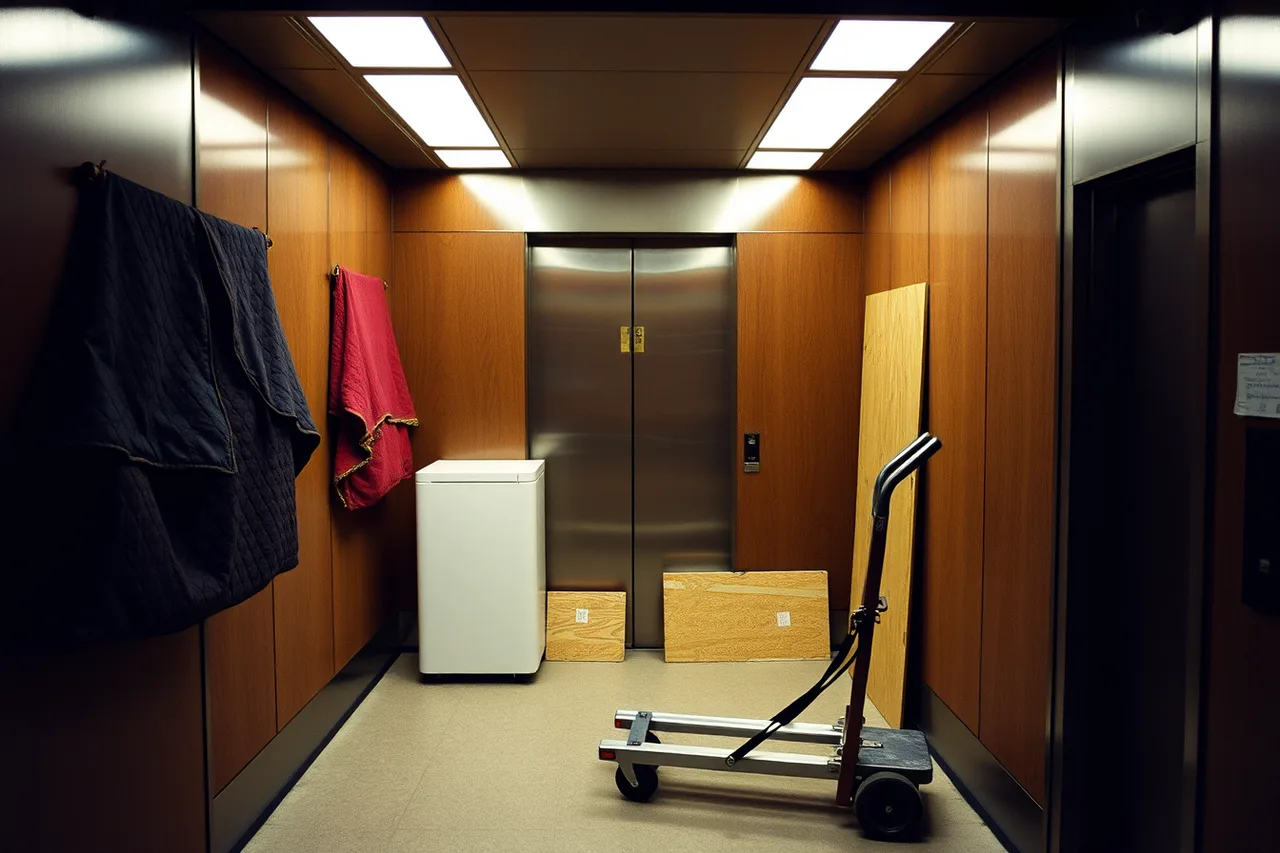
Protection is usually mandatory. Pads, plywood or corner guards must be in place before the appliance moves, and the strata may charge for any damage to cab finishes.
Some buildings require the technician to supply the padding; others keep it on site and bill for its use. Confirm which applies when you make the elevator booking, not when you arrive.
Lead times vary. Downtown towers with a single service elevator may need several days' notice. Suburban low-rises with two elevators are easier. Build the elevator slot into the booking confirmation and treat it as fixed. If the job runs long, you may lose the elevator and the rest of the day.
For a high-rise service call, the elevator window should sit inside the strata's permitted work hours. A slot that starts at 4 p.m. and ends at 6 p.m. leaves no room for a second trip to the van. Book the window, then plan the repair around it.
Parking permits and loading zones for service vans
Vancouver does not hand out free curb space. A service van parked in a loading zone without a permit risks a ticket, and a ticket in a downtown tower can wipe out the margin on the job.
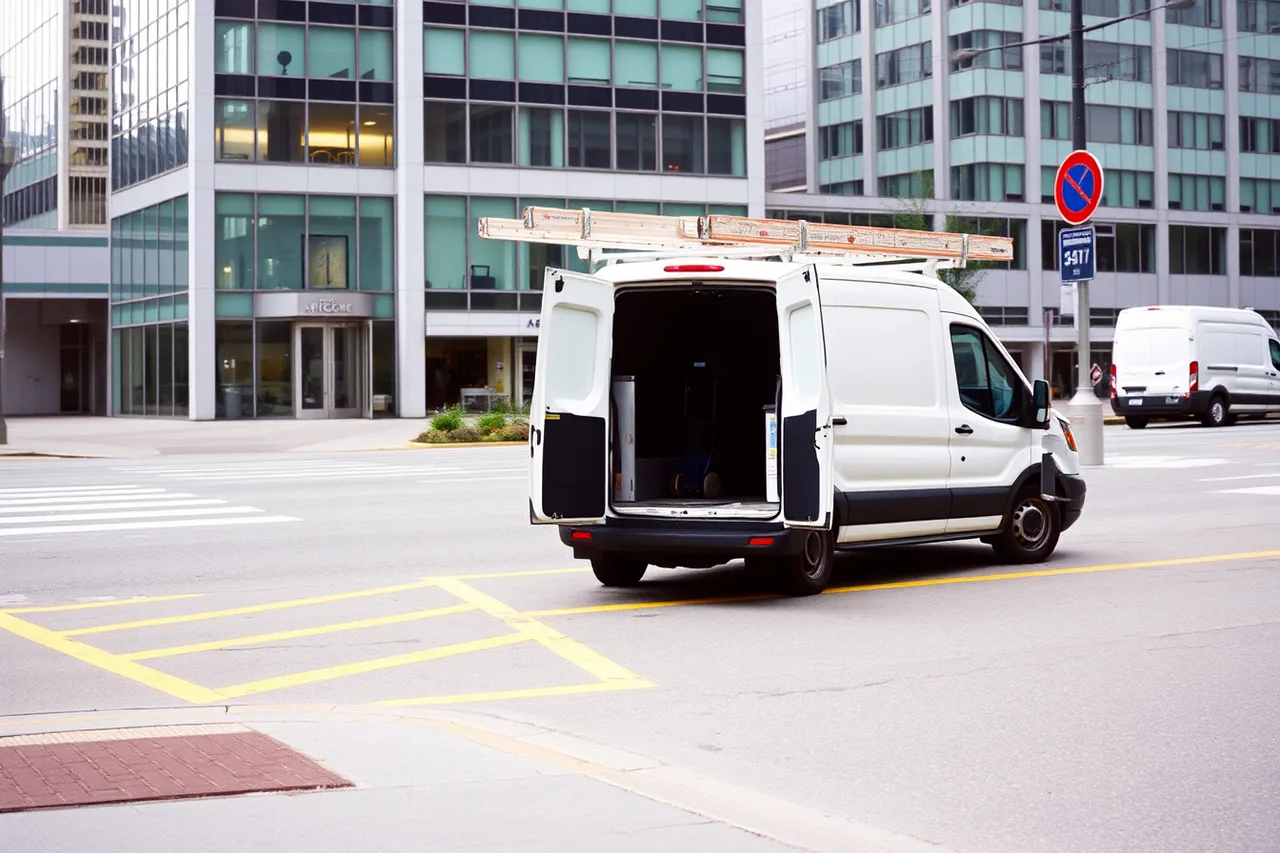
The City of Vancouver issues temporary parking permits for service vehicles, and many strata buildings have their own loading bay or visitor policy that overrides the street.
Check three things before dispatch: whether the building has a loading zone with a time limit, whether the city requires a permit for that block, and whether the strata allows commercial vehicles in the visitor parkade. Some buildings ban vans from the parkade entirely because of height or weight limits.
Loading zone rules are enforced. A van left in a commercial loading zone beyond the posted limit can be ticketed or towed, and the technician is the one standing on the sidewalk with a fridge. If the building has no loading area, plan a drop point and a second person, or book a permit.
Parking also affects the booking itself. A job that needs two trips to the van takes longer, so the time slot should reflect the walk, not just the repair. That is one reason scheduling that works in Vancouver starts with access, not with the appliance.
Building access, keys and concierge coordination
Vancouver strata buildings often run on a concierge or building manager who controls keys, fobs and elevator access. The concierge is not a gatekeeper to work around. They are the person who decides whether the technician gets in on time.
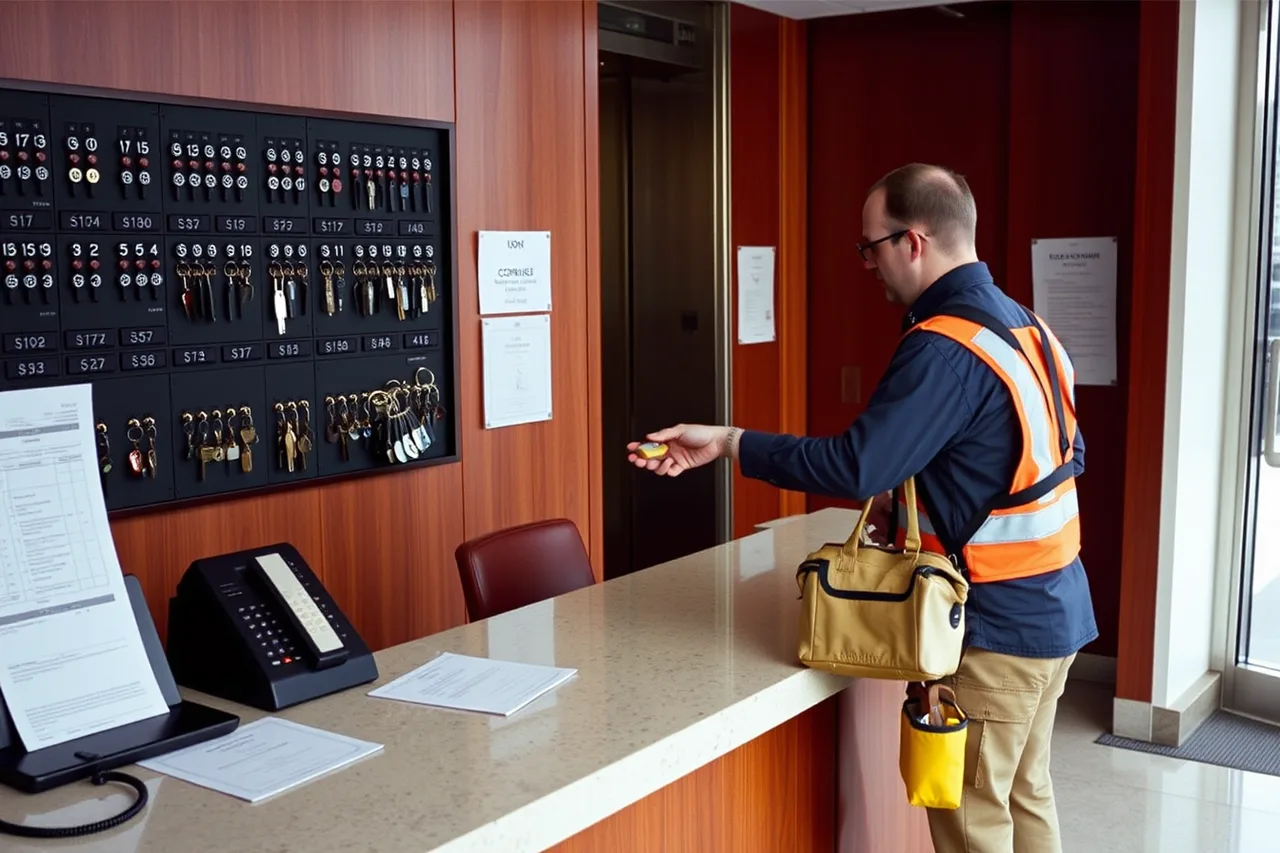
Confirm the access method in advance. Some buildings release a key or fob to a registered contractor; others escort the technician to the unit. Some require a signed key release form and a deposit. If the tenant is not home, the strata may refuse entry even with a booked appointment.
Key coordination steps are simple but easy to skip.
Building access coordination
- Register the technician's name with the concierge before the visit.
- Confirm the unit number and buzzer code.
- Ask whether the concierge will hold a key or whether the tenant must be present.
- On arrival, sign in and note the elevator booking.
For repeat work in the same building, a standing arrangement with the strata manager saves time on every future booking. It also helps to keep a compliance checklist for new technicians so the same access steps are followed every time.
WorkSafeBC clearance letters and insurance proof for strata jobs
Strata corporations and property managers in BC routinely ask for a WorkSafeBC clearance letter before allowing a contractor on site. WorkSafeBC's Clearance Letter web application lets anyone search the clearance status of a business registered with it and print the letter, which tells the hiring party whether the business is registered with WorkSafeBC and paying its premiums as required. That protects the building from liability if a worker is injured, and it means a strata manager can check your status without waiting for you to send it.
A clearance letter is not the same as insurance. Most strata jobs also require a certificate of insurance showing commercial general liability, and sometimes a specific limit named in the bylaws. Keep both documents current and send them with the booking confirmation. A lapsed clearance letter can cancel a job at the door.
WorkSafeBC also sets the occupational health and safety rules that apply to technicians working in BC buildings. That includes safe handling of appliances, working around electrical and gas connections, and following site rules.
Insurance costs vary by coverage, and strata requirements can push a small operator toward a higher limit. It pays to know what a policy actually covers before quoting a high-rise job. Our breakdown of insurance costs explains how limits and endorsements affect the premium.
Scheduling tactics for high-rise appliance repair
High-rise jobs in Vancouver fail on time, not on skill. A technician who arrives inside the elevator window, parks legally and has the clearance letter ready can finish in the booked slot. One who does not will lose the slot and the next job.
Build the booking backwards from the elevator window. Set the repair time, then add the walk from parking, the sign-in at the concierge, the elevator ride and the setup. If the total exceeds the window, split the job or move it.
Group high-rise work by building and by neighbourhood. Two jobs in the same tower on the same day share one elevator booking and one parking stop. That protects the margin on downtown calls.
Leave buffer time for the unexpected. Strata buildings often have one service elevator, and a move-in or a fire alarm can take it out of service. A 30-minute buffer between high-rise jobs is not wasted time; it is insurance against a lost afternoon.
Keep a written SOP checklist for high-rise calls so every technician follows the same sequence. Consistency is what turns a difficult building into a repeat client.
A pre-booking checklist for Vancouver strata jobs
Use this before you confirm any high-rise appointment. It covers the approvals that most often delay a Vancouver service call.
- Strata bylaws checked for permitted service hours and access conditions
- Elevator booked, with protection requirements confirmed
- Parking permit or loading zone plan in place
- Concierge or building manager notified of the technician's name and arrival time
- WorkSafeBC clearance letter and certificate of insurance sent to the strata
- Tenant or owner confirmed as present, with a contact number
- Privacy consent obtained for any unit or tenant details shared with the building
The privacy step matters. In BC, the Personal Information Protection Act (PIPA) applies to any private sector organization that collects, uses and discloses the personal information of individuals in the province, so a repair business collecting tenant names, phone numbers and unit details has duties about how that information is used and stored. PIPA also requires every organization to designate at least one privacy officer to oversee its privacy practices.
Taxes affect the quote as well. BC provincial taxes apply to repair services, and a booking that ignores them can look cheaper than it is. Check the current rules before you price a strata job.
For a new operator, the sequence is: register the business, confirm insurance and clearance, then build the booking process. The workflow for owners shows how access, dispatch and follow-up fit together.