Guides
Appliance repair launch costs and funding, without the optimism
Real launch figures for an appliance repair van, plus the funding sources that cover them and the monthly checks that keep the numbers honest.
What to take away
- Appliance repair launch costs and fundinga one-van start usually lands between $18,000 and $45,000, and the van is roughly half of that.
- The cheapest funding is not a loana manufacturer warranty account pays you for work you already do.
- Every figure below is a range you replace with your own quotes, not a benchmark to copy.
- Price each service line to carry its own callbacks, or the busy month funds the quiet one at a loss.
- Licensing, gas certification and refrigerant work are set by your state or province, so confirm with that authority before you sell the service.
This article is general business information, not legal, tax or safety advice. Appliance repair licensing and technical scope vary by state and province, so confirm what applies to you before quoting a job.
The line items, with numbers
A used cargo van with under 120,000 miles runs $8,000 to $16,000. A new Ford Transit or Ram ProMaster typically starts in the mid $40,000s before shelving. Mileage, rust and model year drive that spread.
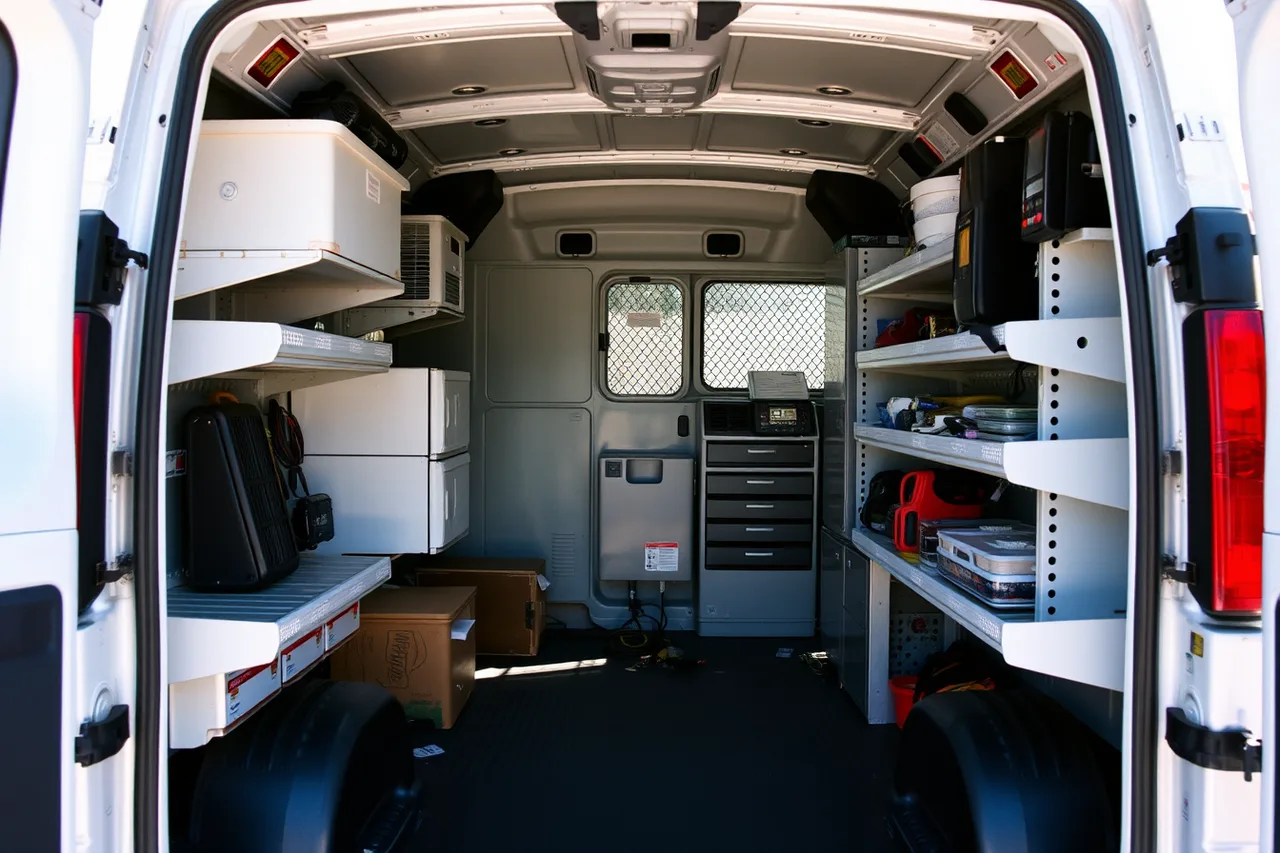
Budget $1,200 to $3,000 for bin shelving, a ladder rack and a partition, which Adrian Steel, Ranger Design and Weather Guard all sell. Budget $300 to $800 for the first aid, spill and floor-protection kit.
Diagnostic tools are the second big block. A clamp meter, multimeter, manometer and leak detector together run $600 to $1,500. For scale, a Fluke 117 multimeter typically lists at $200 to $280, and Fieldpiece clamp meters run $150 to $300.
A recovery machine and vacuum pump for sealed-system work add $1,500 to $3,000, and that work needs EPA Section 608 certification in the United States. The certification exam fee is typically $50 to $150. Robinair and Appion are the common machine brands.
Opening parts inventory for the ten models you see most runs $2,000 to $5,000. Distributors such as Marcone, Reliable Parts and AppliancePartsPros supply the trade, and many ship free above an order minimum of roughly $99 to $250.
Freight on a single emergency board can eat the margin on the call, so order in batches where the distributor allows it.
Insurance, licensing and the paperwork bill
General liability for a one-van operation typically starts around $600 to $1,500 a year. Commercial auto on the van runs $1,800 to $3,500. Inland marine or tools coverage adds $300 to $700.
Next Insurance, Hiscox, Thimble and Progressive Commercial all write policies for small contractors. Ask a licensed broker in your state or province for quotes, because rates move with your driving record and ZIP code.
Business registration, an LLC filing and a local business licence together run $100 to $500 depending on the state. California adds an $800 minimum annual franchise tax on top of its $70 LLC filing fee.
A state contractor or appliance service licence, where one exists, adds $200 to $600. Confirm the requirement with your state licensing board rather than a competitor's website.
Bookkeeping software runs $30 to $80 a month, and QuickBooks Online and Xero are the usual picks. Field service software with scheduling, dispatch and invoicing runs $100 to $400 a month for one or two users, sold by Jobber, Housecall Pro and FieldEdge. ServiceTitan quotes larger crews separately.
A phone number, a simple website and a booking page add $50 to $200 a month. Squarespace and Wix plans account for roughly $16 to $50 of that.
Set aside $3,000 to $6,000 as working capital for the first ninety days. That covers payroll before receivables land, plus the parts you buy on a card while waiting on a warranty credit.
Where the money comes from
Self-funding covers most one-van launches. Owners use savings, a personal line of credit, or a credit card for tools and parts, then pay it down from service revenue. The trade-off is that a slow first quarter lands on your own balance sheet.
An SBA 7(a) loan is the standard small-business route in the United States. The maximum is $5 million, rates usually sit at prime plus 1.5 to 3 points, and equipment terms stretch to 10 years. It needs a business plan, two years of projections and a personal guarantee.
The SBA business guide walks through planning, permits, insurance and finance in order.
An SBA Microloan is the smaller route, capped at $50,000 through community lenders such as Accion Opportunity Fund. The average microloan is around $13,000 to $14,000, with terms up to six years.
Equipment financing suits a van and a recovery machine better than a general loan, because the asset secures the note. Expect to put 10% to 20% down, pay roughly 6% to 12% APR, and repay over three to six years.
Manufacturer warranty accounts are the funding source most new owners miss. Whirlpool, GE Appliances, LG, Samsung and Frigidaire run authorized servicer networks that pay a flat rate per repair, commonly on net 30 terms. Approval takes weeks, not months, and the work arrives without advertising spend.
Apply before you buy the van, so the first calls arrive with the first payment cycle.
A local appliance dealer or property management company will sometimes advance parts cost in exchange for priority service. Get the terms in writing, because a verbal deal on parts credit is how a good account turns into a collection problem.
Factoring invoices or a merchant cash advance is a last resort. Those products price at roughly 20% to 60% annualized, well above a bank line.
The checks that keep it honest
Track gross margin by service line every month. Sealed-system diagnosis, element and board swaps, installation, and warranty work each carry different parts cost and time. A line that loses money on callbacks will not be fixed by raising the price on a different line.
Track callback rate as a percentage of completed jobs. A return visit you do not bill is a cost with no invoice attached, and it shows up in the margin a month later.
Track revenue per booked hour. Divide monthly revenue by the hours your technicians were actually on calls, not the hours they were scheduled. That number tells you whether the problem is demand, routing or pricing.
Review all three on the same day each month. The appliance repair startup and market guide sets those per-job figures beside the market they have to be earned in.
Worked example: one van, first year
An owner buys a used van for $12,000, spends $2,000 on shelving and $1,800 on tools. Insurance, licensing and software come to $4,500 for the year. Opening parts inventory is $3,000, and working capital is $4,000. Total launch cost: about $27,300.
She funds $15,000 from savings, puts $7,300 on a line of credit, and signs a warranty account that pays a flat rate per call.
At 120 calls a month and an average ticket of $185, monthly revenue is $22,200. Parts and freight take 30%, payroll burden takes 35%, and vehicle and overhead take 15%. That leaves roughly $4,440 a month before debt service.
The appliance repair business plan is what turns those assumptions into numbers a lender can check. The order for these decisions, from registration to first invoice, is covered in the guide to starting an appliance repair business.
What to confirm before you spend
- Your state or provincial licensing board has confirmed whether an appliance service licence is required.
- A licensed broker has quoted general liability, commercial auto and tools coverage for your address.
- EPA Section 608 certification is in hand if you will touch sealed refrigerant systems.
- A licensed gas fitter is named for any gas connection work, per your provincial or state gas authority.
- Your accountant has confirmed how GST, HST or PST applies to service calls and parts in your jurisdiction.
- At least one manufacturer warranty account application is submitted.
Common questions
What is the single largest launch cost?
The van. A used cargo van with shelving and a partition runs $9,000 to $19,000, which is often more than every tool and every part on the shelves combined. Buy the van before the tools, because a technician without a van cannot bill a call.
Can I launch without a loan?
Yes, and most one-van operations do. Savings plus a personal line of credit covers a $20,000 to $30,000 launch.
The risk is that a slow first quarter lands on your personal balance sheet, so keep three months of living expenses separate from the business working capital.
Before you spend a dollar of it, work through the equipment checklist for new appliance repair owners so the van, tools and opening parts list are priced before the money moves.
What do the funding sources cost?
SBA Microloans typically run 8% to 13%, and 7(a) loans price at prime plus 1.5 to 3 points. Equipment financing sits near 6% to 12% APR. A business credit card can run 20% to 30% APR, factoring costs more again, and a warranty account carries no interest, only a wait for net 30 payment.
How long before a warranty account pays?
Approval usually takes two to six weeks after you submit the application, insurance certificate and business registration. Payment terms after approval commonly run thirty days from invoice. Apply before you buy the van so the first calls arrive with the first payment cycle.
Where do I check current wage figures?
The U.S. Bureau of Labor Statistics publishes employment and wage estimates for home appliance repairers by area and industry. Use the figure for your metro area as the base wage, then add payroll burden for taxes, insurance and benefits. The IRS starting a business page covers structure, tax IDs and recordkeeping from day one.