Guides
Ontario gas appliance repair licensing and what TSSA requires before you book the job
Appliance repair licensing in Ontario means TSSA registration and gas fitting rules, plus intake checks that decide which gas jobs you can book.
What to take away
- Gas work in Ontario is regulated by the Technical Standards and Safety Authority (TSSA). A municipal business licence does not authorise it.
- Either your company holds a TSSA gas contractor registration, or the gas work is subcontracted to one. The assigned technician also needs a valid certificate in the right class.
- Intake must classify the fuel and the symptom before a slot is offered. A reported gas smell stops the booking.
- Work orders carry the registration number, the technician's certificate number, appliance details and the tests performed.
- Ontario's Consumer Protection Act, 2002 adds estimate, contract and cancellation duties to the same visit.
What TSSA regulates, and what it does not
TSSA is Ontario's delegated fuels safety regulator. It oversees natural gas, propane and fuel oil equipment, plus the companies and people who work on them.
A repair that touches a gas line, a burner, a gas valve, a vent connector or a gas control is gas work. What the customer calls the call does not change that.
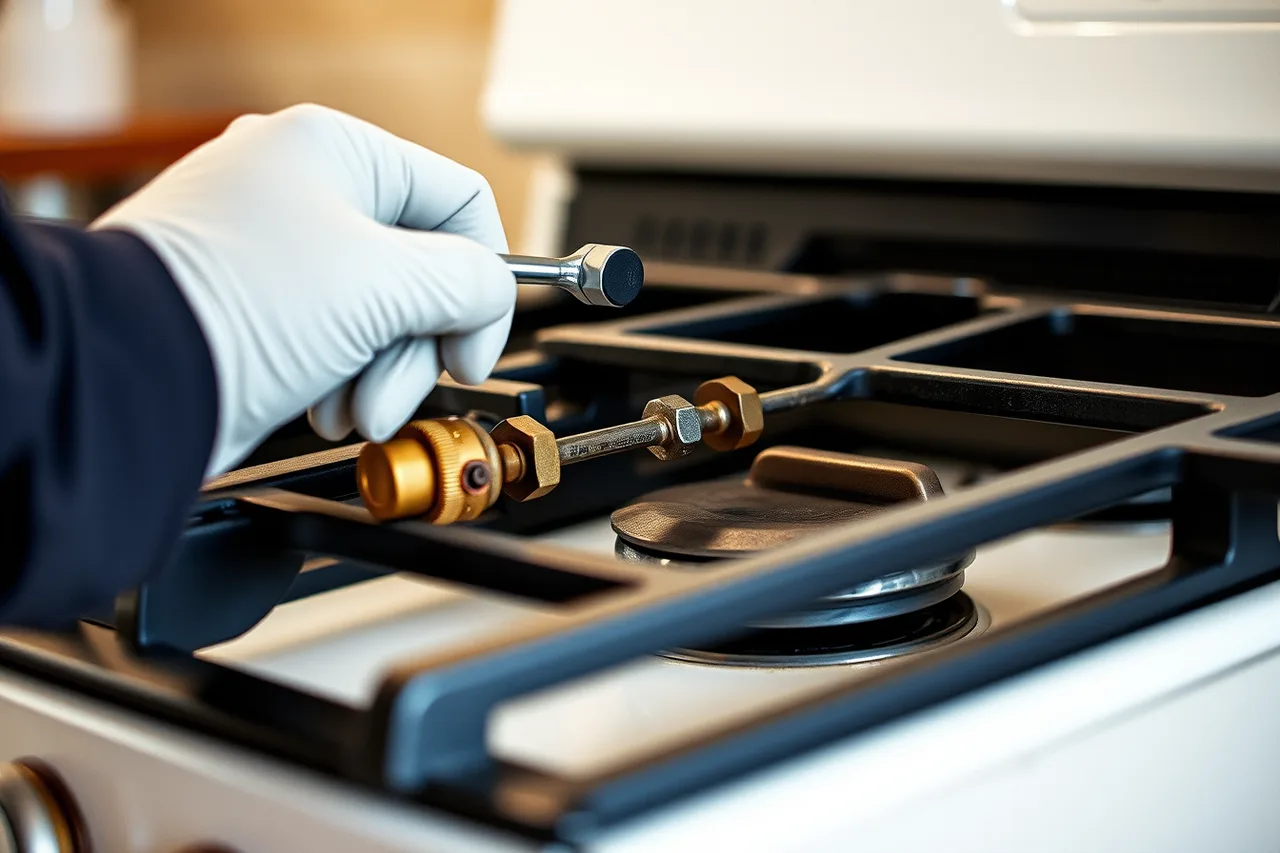
A range that will not light, a dryer with a weak flame, a water heater with a pilot fault: gas work, each one. A dead display on an electric oven is not.
TSSA does not certify appliances. It regulates the contractor and the technician, and the code they follow. A CSA label on an appliance gives no technician permission to open a gas train.
Ontario's gaseous fuels regulation, O. Reg. 212/01, sits behind those requirements. The license requirements that decide whether you can sell a gas repair at all are the TSSA ones.
What TSSA regulates
| Permission | Held by | What it covers |
|---|---|---|
| Municipal business licence | The company | Operating a business in that city |
| TSSA gas contractor registration | The company | Offering and performing gas work |
| Gas technician certificate (G.1, G.2 or G.3) | The individual | Gas work within the certificate class |
Matching the registration and the certificate to the job
The registration belongs to the business. The certificate belongs to the individual. A gas job needs both, and the class on the certificate must cover the appliance and the work sold.
Classes are not interchangeable. G.1, G.2 and G.3 cover different scopes, and propane and oil burner work sit on separate certificate series. Read the class printed on the certificate.
TSSA keeps a public registry where a registration or a certificate can be looked up by name or number. Use it before dispatch rather than trusting a subcontractor's photocopy.
Cleaning and some maintenance tasks may fall outside the same rule. That line is rarely obvious from a phone description, so intake has to classify the job before an offer is made. If it cannot be classified, book a diagnostic visit instead.
Before you book: the checks that gate dispatch
Verification takes minutes when records are current. An expired registration stops the job even when the technician is certified, and a certificate in the wrong class stops it too.
Before you book
- Confirm the company's TSSA gas contractor registration is active and covers the work being sold.
- Confirm the assigned technician holds a valid certificate in the class that matches the appliance.
- Match the appliance type and described work to that registration and class.
- Note the check in the job file with a date and the name of the person who made it.
- Release the job to dispatch when all four checks pass.
Screening a caller for gas work
The person answering the phone cannot see the appliance, so the questions have to be specific enough to classify the work without a visit.
- Is the appliance natural gas, propane or electric?
- What is the exact symptom, and when did it start?
- Is there any smell of gas, or any sign of a leak?
- Has gas work been done on this appliance recently?
- What are the model and serial numbers?
- Is someone over 18 on site, and is the appliance accessible?
Good screening feeds scheduling that works. A correctly classified gas call gets the right technician and the right time window on the first attempt.
Emergency calls: what intake says first
A reported gas smell is not a booking. Intake stops the routine script and gives the emergency instruction before any other question.
If you smell gas or hear a hiss at a gas appliance, leave the building. Do not switch lights on or off, and do not try to shut off or restart the appliance yourself. Once you are outside, call your gas distributor's emergency line, Enbridge Gas across most of Ontario, or 911 if you cannot reach the distributor.
Log the call afterwards. Record what the customer reported, the time, and the instruction given. Do not offer a repair slot for a suspected leak.
What goes on the gas work order
Records answer the question an inspector or an insurer will ask later: who was authorised to do this work, and what did they do?
- Gas contractor registration number.
- Technician name and certificate number.
- Appliance type, make, model, serial number and location.
- Complaint as reported, and findings on site.
- Tests performed, parts replaced, safety devices checked or adjusted.
- Estimate accepted, and any increase the customer approved.
The Canada Revenue Agency expects business records kept for six years, and its guidance for sole proprietors covers what counts as a record. Check your insurer's condition before shortening that.
A steady workflow for owners keeps the same fields on every gas job, which is what saves you when a dispute arrives months later.
Example: a gas dryer booking that passes the gate
A caller reports a dryer that takes two cycles to dry clothes. Intake asks the fuel type. The answer is natural gas, so the booking screen now demands the registration and certificate checks.
The dispatcher confirms the registration is active and the technician's class covers gas dryers. The customer hears what the visit covers, and what a blocked vent or a failed gas valve would add.
If the repair grows past the estimate, the office calls for approval before the extra work starts, and notes the approved amount.
Ontario consumer protection duties on the same booking
TSSA rules cover gas safety. The Consumer Protection Act, 2002 covers the contract with the customer, and it reaches the same visit.
The Act sets out what a repair contract must contain, when a customer can cancel, and what happens when a written estimate is exceeded. If the final price will be higher, the customer generally must approve the increase before the extra work proceeds.
The text sits in the Ontario e-Laws statute, which is the version to read if a dispute escalates. Consumers who cannot resolve a complaint can follow the process described by Consumer Protection Ontario.
Provinces differ. Quebec runs its own consumer regime, which matters if you take calls across the border: Quebec consumer protection rules.